Independent comparison site · Affiliate-funded · Not an operator and not part of any game

Last updated

Evergreen

Facts about casino games that survive checking

Origins, numbers and a few well-documented episodes. Everything here can be verified elsewhere, which rules out most of what circulates on the subject.

Casino history attracts invention. Round numbers get repeated until they sound official, and a good anecdote outlives the correction. What follows is the shorter list: things that are documented, dated where a date is known, and left out where the record is thin.

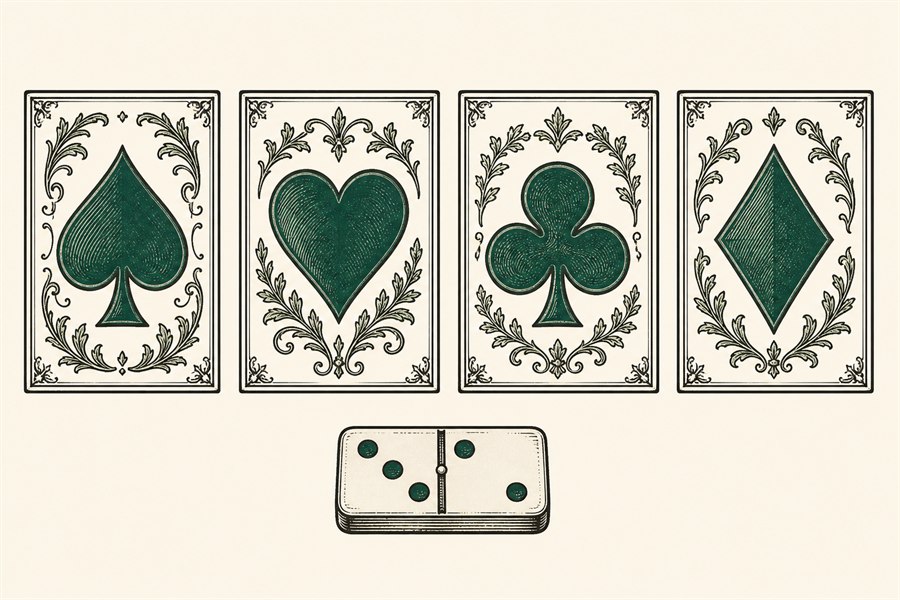
Four framed tiles showing engraved spade, heart, club and diamond suit symbols, with a vintage domino beneath.
The four suits on every deck in Britain are French in design and Italian and Spanish in name.

Where the games came from

  • Cards

    Suits are French, names are borrowed

    The pip designs used across Britain — spade, heart, club, diamond — were settled in fifteenth-century France, because simple stencilled shapes were cheaper to print than the elaborate Italian and German suits. The English names came from elsewhere: "spade" traces back to the Italian spade, meaning swords, and "club" to bastoni, batons.
  • Roulette

    Thirty-seven pockets, and a famous total

    A European wheel carries the numbers 1 to 36 plus a single zero. Add 1 to 36 together and the total is 666, which is the entire basis of the wheel's "devil's game" nickname. The American wheel adds a double zero, making 38 pockets and a noticeably worse deal for the player.

  • Blackjack

    Named after a bonus that no longer exists

    The game arrived in the United States as vingt-et-un. To promote it, some houses paid a bonus when a hand combined the ace of spades with a black jack. The bonus disappeared; the nickname stuck and eventually replaced the original name altogether.

  • Slots

    The Liberty Bell came first

    Charles Fey, a mechanic working in San Francisco, built the three-reel Liberty Bell in the late 1890s. Its automatic payout mechanism is the ancestor of every slot since — and the bell symbol still turns up on machines more than a century later.

  • Fruit machines

    The fruit was the prize

    Early American machines sidestepped anti-gambling laws by paying out in chewing gum rather than coins, with the reel symbols showing the flavour you had won. The cherries, lemons and plums stayed on the reels long after the gum stopped, and gave Britain the name it still uses.

  • Baccarat

    A game with almost no decisions

    In punto banco, the version dealt in most casinos, nobody chooses whether to draw. Fixed tableau rules decide when a third card comes out for player and banker alike. Once the bet is placed, everything that follows is procedure — which is a large part of the appeal.

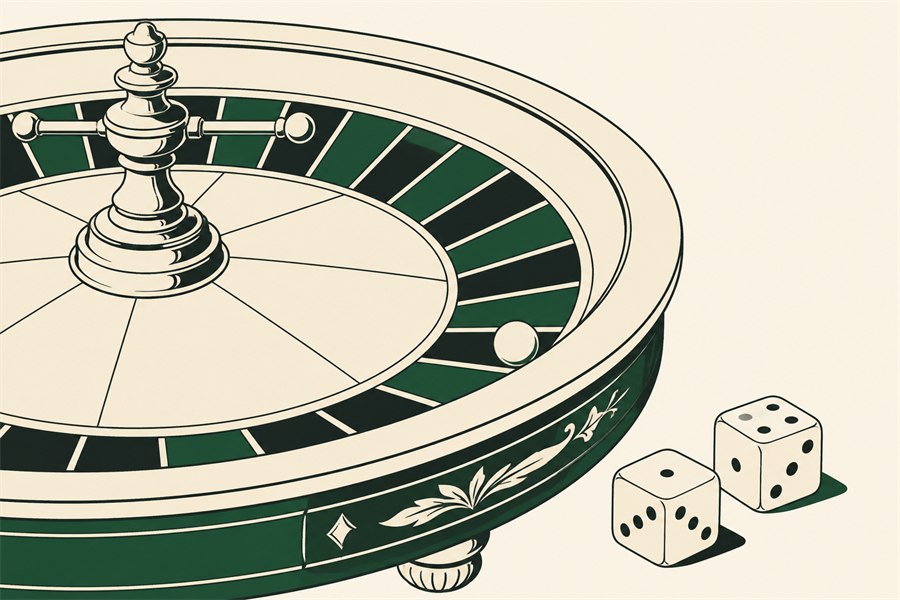
Illustration of a roulette wheel detail with a ball resting in one pocket, and a pair of dice beside it.
Dice are among the oldest gaming objects known; the roulette wheel is a relative newcomer at roughly two and a half centuries.

The episode everyone misremembers

On 18 August 1913, a roulette wheel at the Monte Carlo Casino came up black twenty-six times in succession. Word spread through the room and players piled onto red, convinced that a correction was overdue. Enormous sums went down before the run ended.

The run itself was merely improbable. The interesting part is what the crowd believed: that previous spins had somehow used up the black outcomes. They had not, and they cannot — each spin is independent, and the wheel keeps no record. The episode gave psychology the term Monte Carlo fallacy, still the standard name for the belief that a random sequence owes you a balancing outcome.

Dates that shaped gambling in Britain

  • 1960

    Betting shops become legal

    The Betting and Gaming Act 1960 allowed licensed betting offices to open in Great Britain for the first time. They appeared on high streets in large numbers from 1961, moving off-course betting out of back rooms and into regulated premises.

  • 1994

    The National Lottery launches

    The first National Lottery draw took place in November 1994, and the game reshaped public attitudes to gambling in Britain more thoroughly than any casino ever has — largely because the proceeds went to good causes.

  • 2005

    The Gambling Act creates a regulator

    The Gambling Act 2005 established the Gambling Commission, which took over regulation from the Gaming Board in 2007. Its three licensing objectives — keeping crime out, ensuring fairness, and protecting children and vulnerable people — still underpin every condition an operator works under.

  • 2014

    Offshore operators pulled onshore

    The Gambling (Licensing and Advertising) Act 2014 moved regulation to the point of consumption. Any operator advertising to or serving customers in Great Britain now needs a Commission licence, wherever in the world it happens to be based.

  • 2020

    GAMSTOP becomes compulsory

    From March 2020, every online operator licensed for Great Britain has been required to integrate with GAMSTOP. That single change turned self-exclusion from a site-by-site chore into one registration covering the whole licensed market.

  • Ongoing

    Testing houses check the maths

    Random number generators used by licensed operators are tested by independent laboratories against the Commission's technical standards. The audit covers whether outcomes are genuinely unpredictable and whether the game pays at the rate its own rules claim.

Two things that are true but rarely said

Counting cards is not a criminal offence in the UK. Using your memory is not cheating in law. A casino remains free to refuse your bets or ask you to leave, and generally will — which is why the practice survives in films more comfortably than in card rooms.

Return to player describes the game, not your evening. An RTP figure is a long-run average calculated across an enormous number of rounds. It says nothing about a session, and no arrangement of stakes or timing shifts it. Volatility explains why two games with identical RTP can feel entirely different: the same average, delivered in very different shapes.

Reading on

How these rules translate into the sites you can actually sign up to is the subject of the head-to-head comparisons, and the practical side of playing within limits is covered in staying in control.

18+ This site is for adults aged 18 or over. By continuing you confirm you meet the age requirement. Responsible gambling resources